
 English
 Español
 Portugues
 Pусский
 Français
 العربية
 ไทย
ไทย Indonesia
 Tiếng Việt


Aluminum Wire
Çin'den toptan ve alıntı {anahtar kelime} toptan ve alıntılar bulun. {Anahtar kelime} şirketi, fabrika ve ihracatçıların profesyonel üreticisiyiz, yüksek kaliteli {anahtar kelime} konusunda uzmanlaşmıştır.
ürün
sınıflandırma:
-
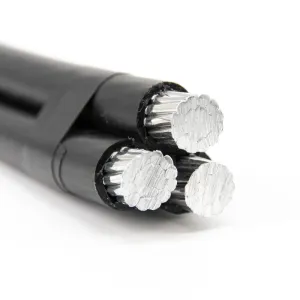
Standard ABC Cable Low Voltage Aluminum Wire with XLPE Insulation for Overhead Power Transmission
Sınıflandırmaları: Havai yalıtılmış çizgi kablolarıGörünümler: 312Sayı:Bırakma süresi: 2025-09-02 08:15:47The Standard Low-Voltage Aluminum Conductor XLPE Insulated Aerial Bundled Cable (ABC) is a core equipment designed for short-distance and distributed power transmission in the medium and low-voltage power distribution field. Relying on the core advantages of "low-voltage adaptability, lightweight design, full insulation protection, and cost-effectiveness", it is widely used in rural distribution network transformation, power distribution upgrading of old urban residential areas, internal power supply of small industrial parks, and power distribution for municipal street lamps and landscape lighting. It has become the preferred solution to replace traditional low-voltage bare wires and single-core plastic insulated cables. Its design closely meets the needs of low-voltage systems for "safety and convenience, low energy consumption, and adaptability to diverse loads", and achieves precise breakthroughs in conductor material selection, insulation performance optimization, and bundled structure design. It can not only adapt to the transmission needs of 0.6/1kV low-voltage level (with a single-circuit current-carrying capacity ranging from 50A to 200A) but also resist common outdoor environmental interference (such as humidity, dust, and mild mechanical impact), providing basic support for the safe and efficient operation of low-voltage power distribution networks. In terms of conductor and specification configuration, the core competitiveness of this cable lies in the cost-effective aluminum conductor and flexible cross-sectional design. The conductor is made of high-purity electrolytic aluminum (content ≥99.6%), processed by continuous extrusion and concentric stranding processes. Compared with copper conductors, aluminum conductors reduce material costs by more than 60% and weight per unit length by 70%, significantly reducing the load on poles and installation costs. At the same time, its conductive performance is guaranteed through process optimization: the conductivity at 20℃ is ≥61% IACS, and the DC resistance of different cross-sections is strictly controlled (e.g., ≤1.83Ω/km for 10mm², ≤0.78Ω/km for 25mm², ≤0.38Ω/km for 50mm²). The line loss rate can be controlled within 3.0%, meeting the low-loss transmission requirements of low-voltage systems. In terms of specifications, it covers common cross-sections such as 4×10mm², 4×16mm², 4×25mm², and 4×50mm², all adopting a 4-core bundled structure of "3 phase lines + 1 neutral line". The neutral line has the same cross-section as the phase lines, which can effectively balance three-phase loads (especially suitable for scenarios prone to imbalance such as residential electricity consumption and small commercial electricity consumption), avoiding line heating or voltage deviation caused by neutral line overload and ensuring the stable operation of electrical equipment. The XLPE insulation layer is a key barrier to ensure the safe operation of the cable under low voltage. Each aluminum conductor is insulated with cross-linked polyethylene (XLPE) as the insulation material, and the insulation thickness is precisely controlled according to the cross-section difference (1.0-1.2mm for 10mm², 1.4-1.6mm for 25mm², 1.8-2.0mm for 50mm²). This not only meets the insulation strength requirements of the 0.6/1kV low-voltage level (power frequency withstand voltage ≥10kV/1min without breakdown, impulse withstand voltage ≥60kV) but also has excellent comprehensive performance. After silane cross-linking treatment, the molecular structure of XLPE is a three-dimensional network, with a long-term allowable operating temperature of 90℃ and a maximum short-circuit withstand temperature of 250℃ (for 1 second). It can adapt to the common load fluctuations in low-voltage systems (such as peak residential electricity consumption in the morning and evening, and equipment startup and shutdown in shops), avoiding thermal aging and cracking of the insulation. Its dielectric loss tangent value is ≤0.0005 (20℃, 50Hz), and the volume resistivity is ≥1×10¹⁴Ω·cm, with stable insulation performance. It can effectively suppress partial discharge (partial discharge capacity ≤10pC), reducing the risk of leakage and short circuit caused by insulation breakdown. In addition, XLPE insulation also has good weather resistance and chemical resistance. After 1500 hours of UV irradiation test, the tensile strength retention rate is ≥80% without discoloration or cracking; when placed in an environment with 85% relative humidity for a long time, the insulation resistance does not decrease significantly. It can adapt to the environmental needs of most outdoor low-voltage scenarios such as rural areas and urban areas, extending the service life of the cable to more than 25 years. In terms of structure and installation adaptability, the bundled design and lightweight advantages of this cable are remarkable. The 4 insulated cores are integrated into one by parallel bundling, and an HDPE sheath (thickness 1.5-2.0mm) can be added to the outer layer as needed. The overall structure is compact (e.g., the outer diameter of 4×25mm² unsheathed cable is about 28-30mm, and that with sheath is about 32-34mm), and the weight per unit length is reasonably controlled (about 1.8kg/m for 4×10mm², 2.8kg/m for 4×25mm², 4.2kg/m for 4×50mm²). It is easier to lay than copper-core cables of the same cross-section—overhead installation can be completed with the help of small wire-releasing machinery or even manual assistance, and the installation efficiency is 50% higher than that of traditional multiple single-core cables. It is especially suitable for scenarios with limited construction space such as narrow rural roads and old urban residential areas. In terms of mechanical performance, the fatigue resistance of the aluminum conductor after 5000 bending cycles has a breaking strength retention rate of ≥85%, which can withstand slight wind loads or bending operations during installation. The minimum bending radius of the cable is 12 times the outer diameter (e.g., about 336mm for 4×25mm² cable), and no excessive stretching is required during laying, avoiding damage to the insulation and conductor, and further ensuring low-voltage construction safety and operation stability. In practical application scenarios, the value of this cable is fully reflected. In the transformation of rural distribution networks, the 4×10mm² and 4×16mm² specifications can replace traditional low-voltage bare wires. A single circuit can meet the electricity needs of 5-10 rural households. The bundled structure reduces the number of line erections, lowering the area of farmland and forest land occupied by poles. At the same time, the full insulation design eliminates the safety hazards of electric shock and short circuit that are common with bare wires. In the power distribution upgrading of old urban residential areas, the 4×25mm² and 4×50mm² specifications can adapt to the overall electricity load of the community (e.g., 4×25mm² for communities with 100 households, 4×50mm² for communities with 200 households). The design of the neutral line with the same cross-section effectively solves the voltage fluctuation problem when air conditioners and water heaters are used intensively, improving the residential electricity experience. In the internal power supply of small industrial parks, the 4×25mm² specification can be used as the workshop power distribution line, adapting to small and medium-sized equipment such as machine tools, fans, and water pumps (power 5-15kW). The oil resistance and dust resistance of XLPE insulation ensure the stable operation of the cable in the industrial environment. In the power distribution of municipal street lamps, the 4×10mm² specification can be overhead along road poles to provide low-voltage power for continuous street lamps. The bundled structure simplifies the line layout and avoids the messy erection of multiple cables affecting the city appearance. In terms of economic and environmental value, this cable also has significant advantages. In terms of material cost, the combination of aluminum conductor and XLPE insulation is 55-65% cheaper than copper-core cables, and the bundled structure reduces the consumption of auxiliary materials (such as insulators and fixing fixtures), resulting in an obvious overall procurement cost advantage. In terms of operation and maintenance cost, its designed service life of 25 years and excellent anti-fault ability reduce the frequency of line replacement, and the full-life cycle operation and maintenance cost is only 1/2 of that of traditional bare wires (traditional bare wires require regular inspection and anti-corrosion treatment, with high annual operation and maintenance costs). In terms of environmental protection, aluminum conductors can be 100% recycled, and XLPE insulation materials can achieve resource recycling after harmless treatment, which conforms to the concept of "green power distribution". At the same time, the lightweight design reduces carbon emissions during transportation, and the bundled structure reduces damage to the ecological environment along the line, making it suitable for low-voltage power distribution construction in rural ecological protection areas and urban landscape areas. In conclusion, through cost-effective material selection, flexible specification configuration, and full insulation structure design, the Standard Low-Voltage Aluminum Conductor XLPE Insulated Aerial Bundled Cable (ABC) has achieved multiple values of "safe adaptation, cost-effectiveness, and environmental durability". It not only solves the pain points of traditional low-voltage power distribution lines such as "high cost, large land occupation, and great safety hazards" but also can adapt to the needs of diverse low-voltage scenarios such as rural areas, urban areas, industry, and municipal administration. It provides key equipment support for the upgrading and transformation of low-voltage power distribution networks and basic power guarantee, and is one of the important products promoting the popularization and standardized development of the low-voltage power distribution field. -
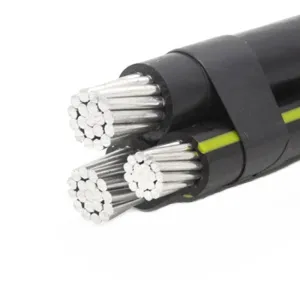
Low Voltage ABC Aerial Bundled Cable Overhead Aluminum Wire with XLPE/LDPE/PVC Insulation Duplex Triplex Power Cable
Sınıflandırmaları: Havai yalıtılmış çizgi kablolarıGörünümler: 407Sayı:Bırakma süresi: 2025-09-04 06:48:24Low Voltage Aerial Bundled Cables (ABC) represent a critical innovation in overhead power distribution, designed to enhance safety, reliability, and efficiency compared to traditional bare conductor systems. This abstract focuses on low voltage ABC cables constructed with aluminum conductors and insulated with cross-linked polyethylene (XLPE), low-density polyethylene (LDPE), or polyvinyl chloride (PVC), with specific emphasis on duplex and triplex configurations. Aerial Bundled Cables (ABC) are characterized by their bundled design, where multiple insulated conductors are twisted together into a single, compact unit. This design eliminates the risk of short circuits due to conductor contact— a common issue with bare conductors— and significantly reduces the likelihood of electrical accidents, making ABC cables ideal for urban, suburban, and rural areas with high pedestrian or vehicular traffic. The use of aluminum as the conductor material is deliberate: aluminum offers a favorable strength-to-weight ratio, excellent electrical conductivity (when compared to its cost), and resistance to corrosion, making it suitable for overhead applications where weight and durability are critical factors. The choice of insulation material—XLPE, LDPE, or PVC—directly impacts the cable’s performance in various environmental conditions. XLPE is renowned for its high temperature resistance (typically up to 90°C), excellent mechanical strength, and resistance to chemical degradation, making it suitable for harsh climates with extreme temperature fluctuations or exposure to industrial pollutants. LDPE, while more flexible than XLPE, has a lower temperature rating (around 70°C) and is often preferred for milder environments where flexibility during installation is a priority. PVC, known for its flame retardancy and low cost, is widely used in indoor or enclosed overhead applications, though it may be less resistant to ultraviolet (UV) radiation and high temperatures compared to XLPE, requiring additional UV stabilizers for outdoor use. Duplex and triplex configurations are among the most common low voltage ABC designs, tailored to meet specific distribution needs. Duplex cables consist of two insulated conductors, typically used for single-phase power supply to residential or small commercial establishments, where a live (phase) conductor and a neutral conductor are required. Triplex cables, by contrast, include three insulated conductors, commonly configured as two phase conductors and one neutral conductor, enabling three-phase power distribution for applications requiring higher power capacity, such as small industrial units or multi-dwelling complexes. Both configurations may include a messenger wire— a stranded steel or aluminum-reinforced conductor— integrated into the bundle to provide mechanical support, reducing sag and ensuring the cable remains stable under wind, ice, or snow loads. The advantages of low voltage ABC cables extend beyond safety. Their bundled design minimizes maintenance requirements: the insulated conductors are protected from weathering, reducing the need for frequent inspections or repairs due to corrosion or conductor damage. Additionally, ABC cables are resistant to bird or animal interference, a major cause of outages in bare conductor systems, as the insulation prevents animals from coming into contact with live conductors. Installation is also simplified compared to traditional overhead lines: the pre-bundled design reduces the number of components, lowering labor costs and installation time, while the lightweight nature of aluminum conductors eases handling. In terms of performance, these cables exhibit low power loss due to the high conductivity of aluminum and the tight insulation, ensuring efficient power transmission with minimal energy waste. Their compact size also reduces the required clearance from trees, buildings, and other structures, making them suitable for areas with limited space or dense vegetation. Furthermore, the insulation materials provide excellent dielectric strength, ensuring reliable operation even in humid or wet conditions, where moisture ingress could otherwise compromise performance. Despite their advantages, low voltage ABC cables have limitations that must be considered. The initial installation cost is generally higher than that of bare conductors, primarily due to the cost of insulation materials and the specialized manufacturing process. However, this is often offset by long-term savings in maintenance, reduced outage frequency, and lower liability from accidents. Additionally, the choice of insulation material requires careful consideration of the local climate: for example, PVC may not be optimal in desert regions with high UV exposure, while LDPE may struggle in cold climates where brittleness could occur. In conclusion, low voltage ABC cables with aluminum conductors and XLPE/LDPE/PVC insulation, in duplex and triplex configurations, represent a versatile and robust solution for modern overhead power distribution. By combining the strength of aluminum, the protective properties of advanced insulators, and the practicality of bundled designs, these cables address key challenges in traditional power distribution, including safety risks, reliability issues, and environmental vulnerability. As global demand for efficient and safe power infrastructure continues to grow, low voltage ABC cables are poised to play an increasingly vital role in ensuring uninterrupted electricity supply across diverse applications and environments.
Haber
sınıflandırma:
Arama sonucu yok!
Dava
sınıflandırma:
Arama sonucu yok!
Video
sınıflandırma:
Arama sonucu yok!
İndir
sınıflandırma:
Arama sonucu yok!
İşe Alım
sınıflandırma:
Arama sonucu yok!
Önerilen ürünler
Arama sonucu yok!



 Telefon
 Posta
Posta