
 English
 Español
 Portugues
 Pусский
 Français
 العربية
 ไทย
ไทย Indonesia
 Tiếng Việt


ABC Cable Conductor
Çin'den toptan ve alıntı {anahtar kelime} toptan ve alıntılar bulun. {Anahtar kelime} şirketi, fabrika ve ihracatçıların profesyonel üreticisiyiz, yüksek kaliteli {anahtar kelime} konusunda uzmanlaşmıştır.
ürün
sınıflandırma:
-
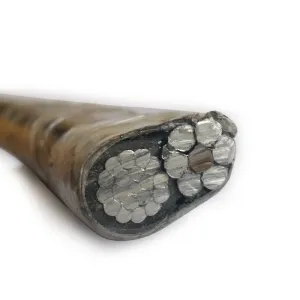
0.6/1kV Preassembled ABC Cable - Duplex/Triplex Aluminum Conductor with XLPE/LDPE/PVC Insulation for Overhead Lines
Sınıflandırmaları: Havai yalıtılmış çizgi kablolarıGörünümler: 243Sayı:Bırakma süresi: 2025-08-29 02:54:59The 0.6/1kV Preassembled ABC Cable (ABC stands for Aerial Bundled Cable) is a high-efficiency power transmission product specifically designed for overhead lines. It features two conductor configurations: Duplex (two-core) and Triplex (three-core), paired with three insulation material options—XLPE (Cross-Linked Polyethylene), LDPE (Low-Density Polyethylene), and PVC (Polyvinyl Chloride). With its preassembled integrated structure, material diversity, and adaptability, it is widely used in medium and low-voltage power distribution networks in urban and rural areas, power supply for residential communities, power transmission in industrial parks, power access in remote areas, and renovation of old lines. It provides a flexible, economical, and reliable solution for overhead power transmission. In terms of core specifications and structural design, the cable’s rated voltage of 0.6/1kV accurately matches the needs of medium and low-voltage power distribution systems. The 0.6kV represents the phase voltage, and 1kV represents the line voltage, which can stably carry conventional power distribution loads, cope with voltage fluctuations in the power grid, and avoid insulation breakdown or conductor damage caused by voltage overload. The conductor is made of aluminum, whose density is only about 1/3 that of copper. While ensuring current-carrying capacity, it significantly reduces the cable’s self-weight, alleviates the load pressure on overhead poles and towers, and lowers the cost of supporting facilities (such as poles, towers, and fittings) and construction difficulty. The conductor configurations include Duplex and Triplex: the Duplex structure usually includes a live wire and a neutral wire, suitable for simple power distribution scenarios; the Triplex structure adds a ground wire, adapting to scenarios with higher safety requirements (such as residential communities and commercial areas with dense populations). There is no need to lay an additional separate ground wire, which simplifies the layout of overhead lines and shortens the construction period. The diversity of insulation materials is one of the core advantages of this cable. The three insulation materials have their own characteristics and can meet the needs of different scenarios: XLPE insulation has excellent electrical performance and temperature resistance, with a long-term operating temperature of up to 90℃ and a short-term overload temperature of 130℃. It has low dielectric loss and high insulation resistance, which can reduce current transmission loss. Moreover, it is aging-resistant and UV-resistant, suitable for harsh outdoor environments with high temperatures and strong sunlight (such as desert areas and plateau open-air lines); LDPE insulation has better flexibility and outstanding low-temperature performance (maintaining elasticity even at -40℃), with strong impact resistance, suitable for overhead lines in cold regions and windy areas, and can avoid insulation layer embrittlement and cracking caused by low temperatures; PVC insulation has lower cost, good flame retardancy and corrosion resistance, suitable for cost-sensitive scenarios with relatively mild environments (such as suburban power distribution lines and indoor-outdoor transition section lines). Users can accurately select the appropriate insulation material according to regional climate, budget cost, and performance requirements to maximize the efficiency of line operation. The preassembled integrated structure is another major highlight of this cable. Unlike traditional overhead bare wires that require on-site assembly, this cable has completed conductor insulation, core bundling and other processes before leaving the factory to form a preassembled finished product. It only needs to be directly erected on-site for use, which greatly shortens the construction time (the construction efficiency is increased by more than 40% compared with traditional line construction); at the same time, the integrated structure integrates multiple cores into the same protection system, avoiding short-circuit faults of traditional bare wires caused by exposed conductors (such as line tripping caused by bird nesting and branch contact), reducing the frequency of power outage maintenance and improving the stability of line operation. In addition, the preassembled structure reduces the environmental interference of on-site construction, especially suitable for line erection in densely populated areas such as residential areas and commercial areas, reducing construction noise and space occupation. From the perspective of performance advantages and scenario adaptability, the cable’s lightweight and weather resistance give it significant competitiveness in overhead power transmission. The combination of aluminum conductors and lightweight insulation materials (both XLPE and LDPE have a density of less than 1g/cm³) makes the weight per unit length of the cable much lower than that of copper conductor cables, which not only reduces transportation costs but also allows the use of lighter poles and towers, reducing the total project investment; the weather resistance of the three insulation materials covers various environments such as high temperature, low temperature, humidity, and corrosion. For example, XLPE is UV-resistant, LDPE is low-temperature resistant, and PVC is acid and alkali resistant, which can adapt to different climate conditions from hot and humid areas in the south to cold areas in the north. In specific scenarios, PVC insulation can be selected for urban and rural power distribution networks to control costs, XLPE insulation can be used in remote areas to improve durability, and LDPE insulation is preferred in cold areas to ensure low-temperature performance; during the renovation of old lines, the preassembled structure can directly replace traditional bare wires without re-adjusting the layout of poles and towers, reducing the difficulty and cost of renovation. In terms of quality assurance, this cable strictly complies with international and domestic overhead cable standards (such as IEC 60502 and GB/T 14049), and conducts full-process control from raw materials to finished products: the aluminum conductor uses electrolytic aluminum with a purity of more than 99.5% to ensure electrical conductivity and mechanical toughness; the insulation materials all undergo special tests such as temperature resistance, aging resistance, and dielectric loss. For example, XLPE needs to pass a 1000-hour thermal aging test, LDPE needs to pass a -40℃ low-temperature bending test, and PVC needs to pass a flame retardancy test; the preassembly process uses automated equipment to accurately control the thickness of the insulation layer (the error does not exceed ±0.1mm) and the core bundling spacing, avoiding defects such as bubbles and impurities; the finished product needs to pass voltage withstand test (no breakdown for 1 minute under 1kV voltage), insulation resistance test (insulation resistance value not less than 1000MΩ·km), mechanical tensile test (conductor elongation at break meets standards), etc. Only after all tests are qualified can the product leave the factory, eliminating quality hazards from the source and building a solid line of defense for the safe and stable operation of overhead lines. In addition, this cable also has the advantage of convenient maintenance in actual use: the preassembled structure enables faster fault point location without checking individual wires one by one; the three insulation materials all have good wear resistance, and no frequent inspection is required in daily use; if local damage occurs, a single section of the cable can be replaced in a targeted manner without replacing the entire line, reducing maintenance costs. Generally speaking, the 0.6/1kV Preassembled ABC Cable has become an ideal choice for overhead line power transmission due to its flexible specifications, diverse materials, efficient structure, and strong adaptability. It provides customized solutions for medium and low-voltage power distribution needs in different scenarios and promotes the construction and upgrading of power infrastructure. -
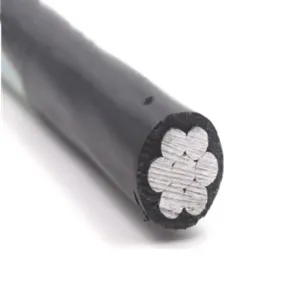
ABC Aerial Bundled Cable Low Voltage Overhead Power Line, AAAC/ACSR Aluminum Conductor XLPE Insulated
Sınıflandırmaları: Havai yalıtılmış çizgi kablolarıGörünümler: 279Sayı:Bırakma süresi: 2025-08-29 03:16:45The ABC Aerial Bundled Cable (ABC stands for Aerial Bundled Cable) is a high-efficiency power distribution product specifically designed for low-voltage overhead power transmission scenarios. It is compatible with low-voltage power grids (usually 0.6/1kV and below) and adopts two high-quality aluminum-based conductors: AAAC (All-Aluminum Alloy Conductor) and ACSR (Aluminum Conductor Steel Reinforced). Paired with an XLPE (Cross-Linked Polyethylene) insulation layer, it leverages its bundled structure, high-strength conductor, and excellent weather-resistant insulation performance to be widely used in urban and rural low-voltage power distribution networks, rural power grid renovation, residential community power supply, industrial park branch transmission, and power access in remote areas. It provides a reliable, economical, and environmentally adaptable power transmission solution for low-voltage overhead lines and is a core component in modern low-voltage power infrastructure construction. In terms of core specifications and conductor characteristics, the cable meets the voltage requirements of low-voltage overhead scenarios, typically with a rated voltage of 0.6/1kV (0.6kV as phase voltage and 1kV as line voltage). It can stably carry the conventional current load of low-voltage power grids, cope with voltage fluctuations in daily electricity use, and avoid insulation breakdown or conductor overheating caused by voltage overload. Two types of conductors—AAAC and ACSR—are available to meet the mechanical and conductive needs of different scenarios: AAAC all-aluminum alloy conductors are made of high-purity aluminum and trace alloying elements (such as magnesium and silicon), combining high conductivity (conductivity up to 61% IACS or higher) and excellent corrosion resistance. They are particularly suitable for corrosive environments such as coastal and humid areas, and their light overall weight can reduce the load pressure on poles and towers; ACSR aluminum-conductor steel-reinforced conductors use a high-strength steel core for support, with aluminum wires twisted on the outer layer. This design not only retains the high conductivity of aluminum but also significantly improves the tensile strength of the conductor (tensile strength up to 120MPa or higher) through the steel core. It is suitable for overhead lines with large spans (such as crossing roads and rivers) or open areas with high wind speeds, and can resist line stretching and shaking caused by strong winds. The cross-sectional specifications of the two conductors cover a wide range (commonly 10mm²-120mm²), allowing users to accurately select models based on line load, span distance, and environmental corrosion degree to ensure long-term stable operation of the line. The selection of XLPE material for the insulation layer is one of the core advantages of this cable. Compared with traditional PVC or PE insulation, XLPE has more excellent electrical and weather-resistant performance: in terms of electrical properties, XLPE has extremely low dielectric loss (usually <0.002) and high insulation resistance (>1000MΩ·km), which can effectively reduce energy loss during current transmission and improve power utilization efficiency; in terms of temperature resistance, XLPE can operate at a long-term temperature of up to 90℃ and a short-term overload temperature of up to 130℃, capable of withstanding heat shock from high-temperature exposure in summer and short-term current peaks, avoiding softening and deformation of the insulation layer; in terms of weather resistance, after cross-linking treatment, the molecular structure of XLPE forms a three-dimensional network structure, significantly enhancing its UV resistance and anti-aging ability. In outdoor overhead scenarios, it can resist embrittlement and cracking of the insulation layer caused by direct sunlight, wind, and rain erosion, with a service life of more than 20 years, far exceeding that of traditional insulation materials. In addition, XLPE also has good chemical corrosion resistance, which can resist acid-base pollutants in industrial areas and salt spray erosion in coastal areas, further expanding the environmental adaptability range of the cable. The bundled structure is a key design that distinguishes this cable from traditional overhead bare wires. Unlike traditional overhead lines that require separate erection of live wires, neutral wires, and ground wires, the ABC cable bundles multiple insulated conductors (usually including live wires, neutral wires, and ground wires in some models) into a single cable bundle through a dedicated process. This structure brings multiple advantages: first, it simplifies the line layout, reduces the number of overhead lines to be erected, lowers the usage of supporting facilities such as poles, towers, and fittings, and shortens the construction period (construction efficiency is increased by more than 30% compared with traditional lines); second, it avoids exposed conductors, greatly reducing short-circuit faults caused by bird nesting, branch contact, and foreign object 搭接,and reducing the frequency of power outage maintenance (fault rate can be reduced by more than 60%); third, it improves line safety—the insulation layer isolates the conductor from the outside world, effectively preventing electric shock accidents caused by accidental contact by personnel or animals, especially suitable for urban and rural areas with high population density. At the same time, the bundled structure makes the overall outer diameter of the cable smaller and the wind resistance coefficient lower, which can reduce the impact of strong winds and ice coating on the line and improve the line stability under extreme weather. From the perspective of scenario adaptability and performance advantages, the characteristics of this cable make it widely applicable in the field of low-voltage overhead. In urban and rural power distribution networks, the AAAC conductor model can be used in coastal or rainy areas to resist humid corrosion; the ACSR conductor model is suitable for main roads or suburban lines with large spans to ensure tensile performance. In rural power grid renovation, the lightweight and bundled design of the cable can reduce the construction difficulty in remote areas, and erection can be completed without large lifting equipment, accelerating the speed of rural power coverage. In the branch transmission scenarios of residential communities and industrial parks, the bundled structure can reduce the space occupied by lines, avoid safety hazards of traditional bare wires to the surrounding environment, and the low-loss characteristic of XLPE insulation can reduce power loss inside communities and parks, improving power supply efficiency. In addition, the cable has strong maintenance convenience: the bundled structure enables faster fault point location without checking individual wires one by one; the anti-aging property of XLPE reduces the frequency of daily inspection and replacement, and only regular visual inspection and insulation resistance testing are required, greatly reducing operation and maintenance costs. In terms of quality assurance, this cable strictly complies with international and domestic low-voltage overhead cable standards (such as IEC 60502-2 and GB/T 14049), with full-process control from raw materials to finished products: for conductors, AAAC must comply with GB/T 1179 standards, and ACSR must comply with GB/T 1179 or IEC 61089 standards to ensure that the conductor purity, tensile strength, and conductivity meet the standards; XLPE insulation materials must pass 1000-hour thermal aging tests, UV resistance tests, and dielectric loss tests to ensure long-term stable insulation performance; the bundling process uses automated equipment to accurately control the conductor spacing and insulation layer thickness (insulation thickness error does not exceed ±0.1mm), avoiding defects such as bubbles and impurities. The finished product testing includes voltage withstand test (no breakdown for 1 minute under 1kV voltage), insulation resistance test, conductor DC resistance test, tensile strength test, and weather resistance test (simulating 5000 hours of outdoor environmental aging). Only after all tests are qualified can the product leave the factory, eliminating quality hazards from the source and building a solid line of defense for the safe and stable operation of low-voltage overhead lines. Generally speaking, the ABC Aerial Bundled Cable for low-voltage overhead power lines, with its diverse high-strength conductors, high-performance XLPE insulation, and efficient bundled structure, perfectly adapts to the complex needs of low-voltage overhead scenarios. It not only solves the problems of poor safety and frequent faults of traditional bare wires but also takes into account the mechanical and weather-resistant requirements in different environments. It provides customized solutions for various low-voltage power distribution scenarios such as urban and rural areas, rural areas, and industrial parks, promoting the upgrading of low-voltage power infrastructure towards higher efficiency, safety, and durability. -
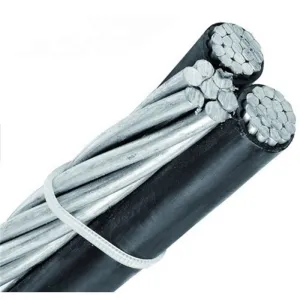
ABC Aerial Bundled Cable 0.6/1kV Low Voltage, Aluminum Conductor XLPE Insulated
Sınıflandırmaları: Havai yalıtılmış çizgi kablolarıGörünümler: 295Sayı:Bırakma süresi: 2025-08-29 03:26:59The ABC Aerial Bundled Cable (ABC stands for Aerial Bundled Cable) for 0.6/1kV low-voltage applications is a high-efficiency power distribution product specifically designed for low-voltage overhead power transmission scenarios. With a rated voltage of 0.6/1kV (0.6kV as phase voltage and 1kV as line voltage), it adopts high-purity aluminum conductors and XLPE (Cross-Linked Polyethylene) insulation layers. Through a bundled process, multiple insulated conductors are integrated into a single unit. This cable is widely used in urban and rural low-voltage power distribution networks, rural power grid renovation, branch power supply for residential communities, internal power transmission in industrial parks, and power access in remote areas. It provides a safe, economical, and weather-resistant power transmission solution for low-voltage overhead lines and serves as a key component in modern low-voltage power infrastructure construction. In terms of core specifications and conductor characteristics, the cable’s rated voltage is precisely adapted to the needs of low-voltage power grids. It can stably carry daily electricity loads, cope with voltage fluctuations in the power grid, and avoid insulation breakdown or conductor overheating caused by voltage overload. The aluminum conductors are made of electrolytic aluminum with a purity of over 99.5%, and some models undergo alloying treatment (e.g., adding magnesium and silicon elements) to further enhance mechanical strength and corrosion resistance. Its conductivity can reach over 61% IACS (International Annealed Copper Standard), ensuring efficient current transmission while significantly reducing the conductor’s self-weight (the density of aluminum is only 1/3 that of copper). This reduces the load pressure on overhead poles and towers, and lowers the cost of supporting hardware and poles. The conductor cross-sectional specifications cover a wide range (commonly 10mm²-120mm²), allowing flexible selection based on line loads (such as lighting, sockets, and small power equipment) to meet the electricity needs of different scenarios. The XLPE insulation layer is one of the core advantages of this cable. Compared with traditional PVC or PE insulation, it has more excellent comprehensive performance: in terms of electrical performance, XLPE has extremely low dielectric loss (usually <0.002) and high insulation resistance (>1000MΩ·km), which can effectively reduce energy loss during current transmission and improve power utilization efficiency; in terms of temperature resistance, XLPE can operate at a long-term temperature of up to 90℃ and a short-term overload temperature of up to 130℃, capable of withstanding heat shocks from high-temperature exposure in summer and short-term current peaks, avoiding softening and deformation of the insulation layer; in terms of weather resistance, after cross-linking treatment, XLPE forms a three-dimensional network molecular structure, significantly enhancing its UV resistance and anti-aging ability. In outdoor overhead scenarios, it can resist embrittlement and cracking of the insulation layer caused by direct sunlight, wind, and rain erosion, with a service life of more than 20 years, far exceeding that of traditional insulation materials. In addition, XLPE also has good chemical corrosion resistance, which can resist acid-base pollutants in industrial areas and salt spray erosion in coastal areas, expanding the environmental adaptability range of the cable. The bundled structure is a key design that distinguishes this cable from traditional overhead bare wires. Unlike traditional overhead lines that require separate erection of live wires, neutral wires, and ground wires, the ABC cable integrates multiple insulated conductors (usually 2-4 cores, including live wires, neutral wires, and ground wires in some models) into a unified cable bundle through a dedicated process, bringing multiple advantages: first, it simplifies the line layout, reduces the number of overhead lines to be erected, lowers the usage of supporting facilities such as poles and insulators, and shortens the construction period (construction efficiency is increased by more than 30% compared with traditional lines); second, it eliminates the risk of exposed conductors, greatly reducing short-circuit faults caused by bird nesting, branch contact, and foreign object overlap,and reducing the frequency of power outage maintenance (the fault rate can be reduced by more than 60%); third, it improves line safety—the insulation layer isolates the conductor from the outside world, effectively preventing electric shock accidents caused by accidental contact by personnel or animals, especially suitable for urban and rural areas with high population density. At the same time, the bundled structure makes the overall outer diameter of the cable smaller and the wind resistance coefficient lower, which can reduce the impact of strong winds and ice coating on the line and improve the operation stability under extreme weather. From the perspective of scenario adaptability and practical advantages, the characteristics of this cable make it widely applicable in the field of low-voltage overhead. In urban and rural power distribution networks, it can replace traditional bare wires and single-core insulated cables, reducing the space occupied by lines and beautifying the urban landscape; in rural power grid renovation, the lightweight aluminum conductor and bundled design can reduce the construction difficulty in remote areas, and erection can be completed without large lifting equipment, accelerating the speed of rural power coverage; in residential communities and industrial parks, its low-loss characteristic can reduce internal power loss, save electricity costs, and the insulated structure avoids the safety hazards of traditional bare wires to the surrounding environment; in power access scenarios in remote areas, the weather-resistant XLPE insulation and aluminum conductor can adapt to harsh natural environments, reducing the workload of later maintenance. In terms of quality assurance, this cable strictly complies with international and domestic low-voltage overhead cable standards (such as IEC 60502-2 and GB/T 14049), with full-process control from raw materials to finished products: aluminum conductors must pass conductivity, tensile strength, and corrosion resistance tests; XLPE insulation materials must undergo 1000-hour thermal aging, UV resistance, dielectric loss, and other special tests; the bundling process uses automated equipment to accurately control the conductor spacing and insulation layer thickness (with an error not exceeding ±0.1mm), avoiding defects such as bubbles and impurities. The finished product testing includes voltage withstand test (no breakdown for 1 minute under 1kV voltage), insulation resistance test, conductor DC resistance test, weather resistance test (simulating 5000 hours of outdoor aging), and mechanical tensile test. Only after all tests are qualified can the product leave the factory, eliminating quality hazards from the source and building a solid line of defense for the safe and stable operation of low-voltage overhead lines. Generally speaking, the 0.6/1kV low-voltage ABC aerial bundled cable, with its efficient bundled structure and high-quality combination of aluminum conductors and XLPE insulation, perfectly solves the problems of poor safety, frequent faults, and complex construction of traditional low-voltage overhead lines. It balances performance, cost, and environmental adaptability, providing a reliable solution for various low-voltage overhead power distribution scenarios and promoting the upgrading of low-voltage power infrastructure towards higher efficiency, safety, and durability.
Haber
sınıflandırma:
Arama sonucu yok!
Dava
sınıflandırma:
Arama sonucu yok!
Video
sınıflandırma:
Arama sonucu yok!
İndir
sınıflandırma:
Arama sonucu yok!
İşe Alım
sınıflandırma:
Arama sonucu yok!
Önerilen ürünler
Arama sonucu yok!



 Telefon
 Posta
Posta